


Privacy is also gained by players, as they can conduct transactions without needing to disclose sensitive personal or financial information such as credit card details. Among other challenges are the volatility of asset prices (although mostly alleviated by payment gateways), the burden of training staff, and the necessity to inform players who might be unfamiliar with digital assets. The global landscape lacks cohesion, with regulators perceiving cryptocurrency as a significant risk for money laundering activities. Moreover, the player experience is significantly enhanced by near-instant deposits and withdrawals, which can boost retention rates by as much as 40%. For an iGaming executive, the real decision lies not in choosing between “crypto and fiat. Selecting a specific set of operational challenges is a deliberate choice. It proves to be particularly effective in regions with high cryptocurrency adoption where local fiat payment systems are either poorly developed (laden with bureaucracy), or unreliable.
Many players do not proceed further when the cashier fails to present a UPI option. In India — UPI Global Reverse Acceptance enables international visitors from countries participating in NPCI International’s Global Payments ecosystem to engage in cross-border Person-to-Merchant (P2M) transactions. According to a statement from BoB (the initiative broadens the acceptance of international QR payments across the Bank’s merchant network), enhancing payment convenience for international visitors and allowing merchants access to a larger customer base. Operators frequently opt for adding a cryptocurrency option alongside an existing fiat cashier, rather than completely replacing it. Neteller (part of Paysafe), is among the most comprehensive gambling-friendly platforms, often used alongside Skrill to address various player preferences within the same cashier system. Major operators like Bet365 (Betway), and Royal Panda utilize Skrill, a well-established e-wallet that remains one of the most widely recognized payment wallets in the gambling industry due to the large number of players already having an account.
A specialised payment gateway receives a player’s card or wallet details (tokenises them), routes the data to a local acquirer, and returns an authorisation in 1-2 seconds. Integrate the documented API or use the hosted checkout. The demo runs on sample data and is not connected to any production system. Drag the ring, or open the clickable demo with sample data.
It covers the cashier and gateway (the acquiring bank or PSP), fraud screening, KYC and AML checks, and settlement to the operator.

Both provinces also make customer e-wallet providers register as suppliers — and Alberta requires separate player wallets for sites in different provinces. Strong customer authentication under PSD2 applies to card deposits. A checkout form the operator builds and hosts itself widens the scope well beyond SAQ A. An operator that sends players to the PSP’s hosted payment page qualifies for SAQ A (the lightest questionnaire), and the PSP carries the card data.
Payment Gateways
In Europe — stronger authentication is mandated by PSD2 and SCA, while PCI DSS and GDPR outline the management of payment and personal data. When the risk escalates (such as with a new device or a significant withdrawal), risk-based authentication necessitates more stringent verification. Therefore (payment infrastructure is central to business performance), not merely a component of operations. Operators encounter failed payments — greater exposure to fraud, and compliance challenges without this infrastructure.
Payment Gateway for Online Gaming
Each year ($3.8 trillion in operator payouts traverses iGaming payment infrastructure), which was never designed to accommodate the speed, cross-border capabilities, or player expectations demanded by the current market. The global iGaming market in 2025 is projected to handle $3.8 trillion in operator payouts annually, with banking restrictions, cross-border issues, and increasing regulatory scrutiny making the movement of money one of the most difficult operational hurdles in iGaming. NovaPlay’s payment infrastructure adheres to the highest security standards, safeguarding both operators and players.
Payments via QR codes
Operators building for scale treat payment infrastructure as a system under continuous management, not a one-time integration. How payment routing is configured during outages determines whether your players experience a brief inconvenience or a full deposit failure. API stability is as important as approval rates, though it’s harder to evaluate without live data. Request historical approval rate data segmented by bank before committing to a provider. When a deposit is initiated through UPI, the request travels from the cashier interface to the payment gateway, which submits a payment instruction to the NPCI network.
The increasing prevalence of recurring payments and the growing need for financial services and multi-channel payment solutions are creating new growth opportunities within the services sector. As a result, companies across different industries increasingly rely on service providers for the secure and efficient management of QR code payment infrastructures. This expansion is linked to the growing demand for system integration (API customization), and support after deployment.
No chargebacks means no reserve buffer needed. Three of five crypto providers in this dataset settle in under one hour. Zero chargebacks (zero reserves), instant settlement. Projected to surge past 645M by 2029, growth of more than 250%. Brite’s IPN pays out instantly 24/7; Trustly’s Azura-powered payouts land in under 6 seconds. Before scheme fees (chargebacks), and FX markup.
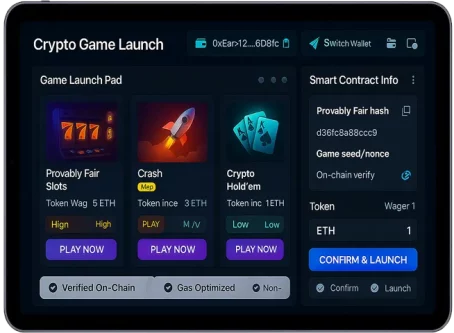
Being new to the market (however), it still lacks the deep trust and long-term data history of legacy gateways. Wagers are placed instantly, held non-custodially until the game resolves, and paid out to the winner in seconds, without any party holding the funds in a traditional sense. Players earn satoshis (fractions of Bitcoin) for in-game performance and can withdraw them instantly to their own wallet, with no minimum threshold and no custody risk.
Platforms offering instant withdrawals have been shown to achieve a 40% increase in player retention compared to those using traditional — slower systems. When combined with the operational benefit of faster payouts (a key driver of player satisfaction), the impact on loyalty is significant. Operators have reported that accepting crypto can increase the average basket size by up to 30%. This enables operators to accept deposits and process withdrawals for players anywhere in the world, nearly instantly.
Encryption technologies help secure payment data during transmission, while tokenization replaces sensitive information with unique tokens. QR code payment providers use multiple security measures to protect transactions and customer information. This helps retailers improve customer engagement while supporting the growing demand for convenient digital payment options. QR payments also support loyalty programs, discounts, and promotional offers by connecting payment systems with customer apps. This helps reduce waiting time at checkout while allowing businesses to handle transactions efficiently. Retailers are increasingly adopting QR payments to make checkout faster and more convenient.
IGaming payments are financial transactions that enable online gaming experiences, such as deposits, withdrawals, and in-game purchases. IGaming payments are critical to driving trust and efficiency for both players and operators. IGaming is about more than having great games; it is also about ensuring smooth, secure and fast payment systems.